
How Much Does a Full Home Renovation Cost in Toronto? (2026 update)
Average Cost of a Full-Gut Renovation in Toronto
Renovating an older Toronto home is one of the most powerful ways to tailor your space to your family and lifestyle—but it’s also a major investment. In 2026, a full, high-quality, whole-home renovation in Toronto typically starts around the high six figures and can easily move into seven figures depending on scope, size, and the condition of your existing home.
Below, we’ll walk through how costs are structured, what really drives your budget up or down, and how to plan a renovation that fits both your wish list and your financial comfort zone.
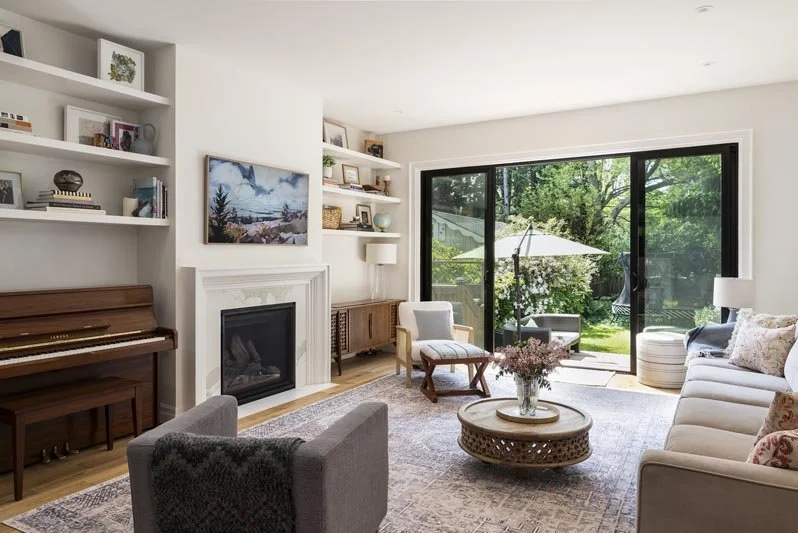
Roncesvalles, Toronto Addition & Renovation — Lighthaus Built
Why Renovate Your Toronto Home Instead of Moving?
In Toronto, renovating is almost a rite of passage. Many of the city’s most sought-after neighbourhoods—Roncesvalles, Riverdale, The Beaches, Moore Park, Lawrence Park, and others—are filled with houses that are 80–120 years old. These homes often have beautiful bones but outdated layouts, tired finishes, and aging systems.
Homeowners typically choose to renovate because they want to:
Upgrade comfort, energy efficiency, and performance (insulation, windows, HVAC).
Modernize layouts for how families live today—open kitchens, better flow, more storage.
Gain more usable space through additions, top-ups, or underpinning existing basements.
At the same time, the cost of buying a different home in your preferred neighbourhood is often prohibitive once you factor in Toronto’s prices, land transfer tax, and moving costs. Renovating lets you stay where you love, while transforming the house you have into the home you actually want.
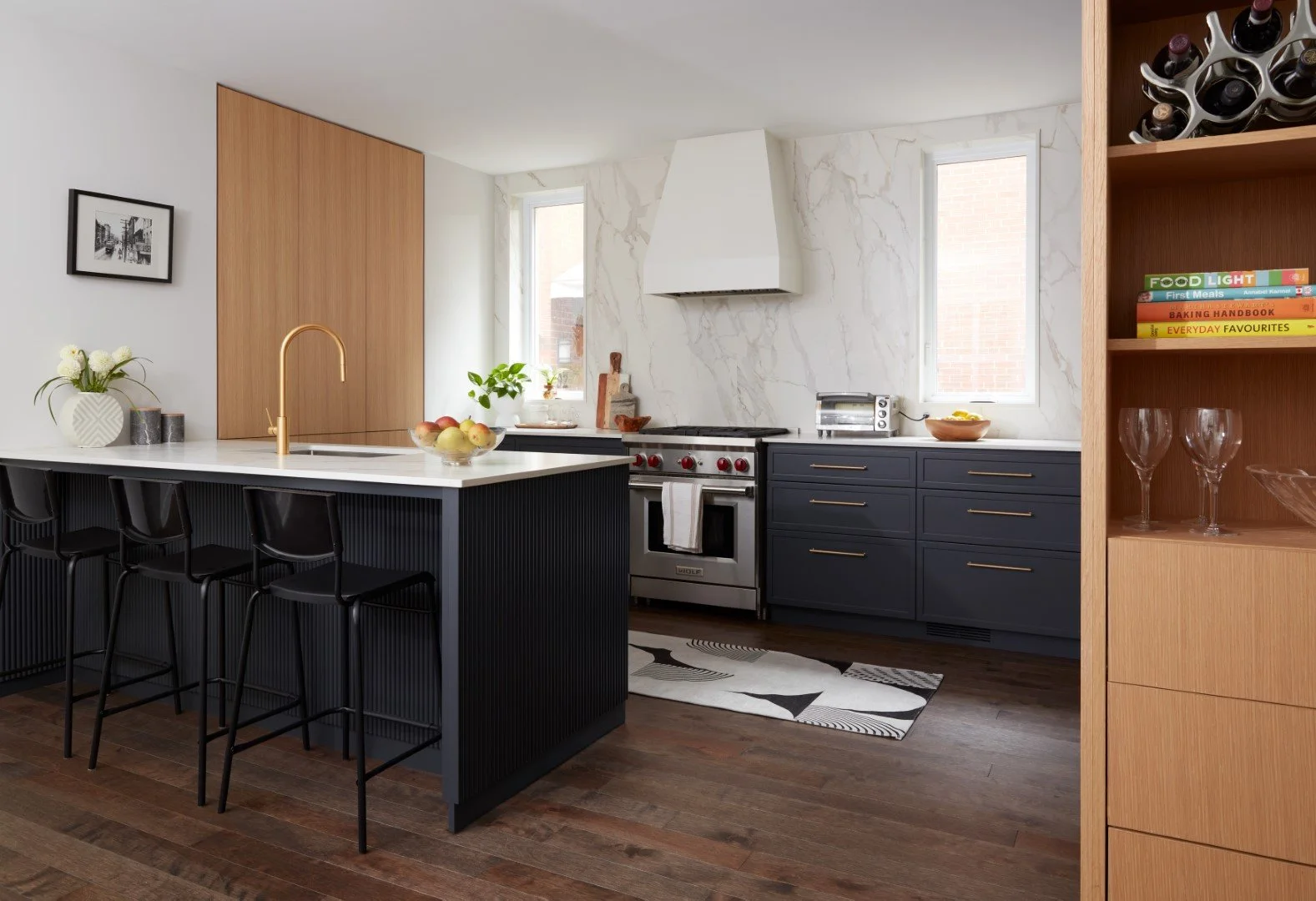
Moore Park, Toronto Home Addition & Renovation — Lighthaus Built
Renovate or Tear Down and Rebuild?
Before you fall in love with a renovation concept, it’s important to confirm whether your existing structure is worth keeping. In some cases, a teardown and new build may be a better long-term investment.
You may want to discuss a rebuild if:
The foundation is severely compromised, rotten, or very costly to salvage.
You strongly dislike the exterior, and recladding is not an option.
Zoning and lot conditions make a new build appealing despite potential setbacks and approvals.
A new build will give you complete freedom of layout, style, and performance, but on many narrow Toronto lots, current zoning setbacks can actually reduce your buildable footprint compared to the existing house. The right answer comes from a frank conversation between you, your architect, and your builder after a thorough review of your house and property.

High Park, Toronto Home & Kitchen Renovation — Lighthaus Built
How Much Does a Full Home Renovation Cost in Toronto in 2026?
When most people ask, “How much does a full house renovation cost in Toronto?” they’re usually imagining a complete transformation: new layout, new kitchen and bathrooms, upgraded mechanical systems, insulation, windows, finishes, and often work to the basement or an addition. That level of work is very different, in cost and complexity, from a cosmetic facelift.
For a high-quality, full-gut renovation of an older Toronto home in 2026, you should generally expect:
Cost per square foot: approximately 450–550+ for a comprehensive whole-home renovation, depending on scope, structural work, access, and finish level.
Total project budgets (very rough ranges; every home is unique):
Smaller semi-detached or row homes (e.g. 1,500–1,800 sq. ft): often in the $750,000–$1,000,000+ range for a full gut including systems and finishes.
Larger detached homes (e.g. 2,000–2,500+ sq. ft): often $800,000–$1,500,000+ depending on additions, underpinning, and level of customization.
These figures assume a high-quality renovation typical of Lighthaus Built projects: substantial structural work where needed, updated mechanical systems, thoughtful design, and carefully detailed finishes rather than “builder grade.”
2026 Cost Snapshot (Ballpark Only)
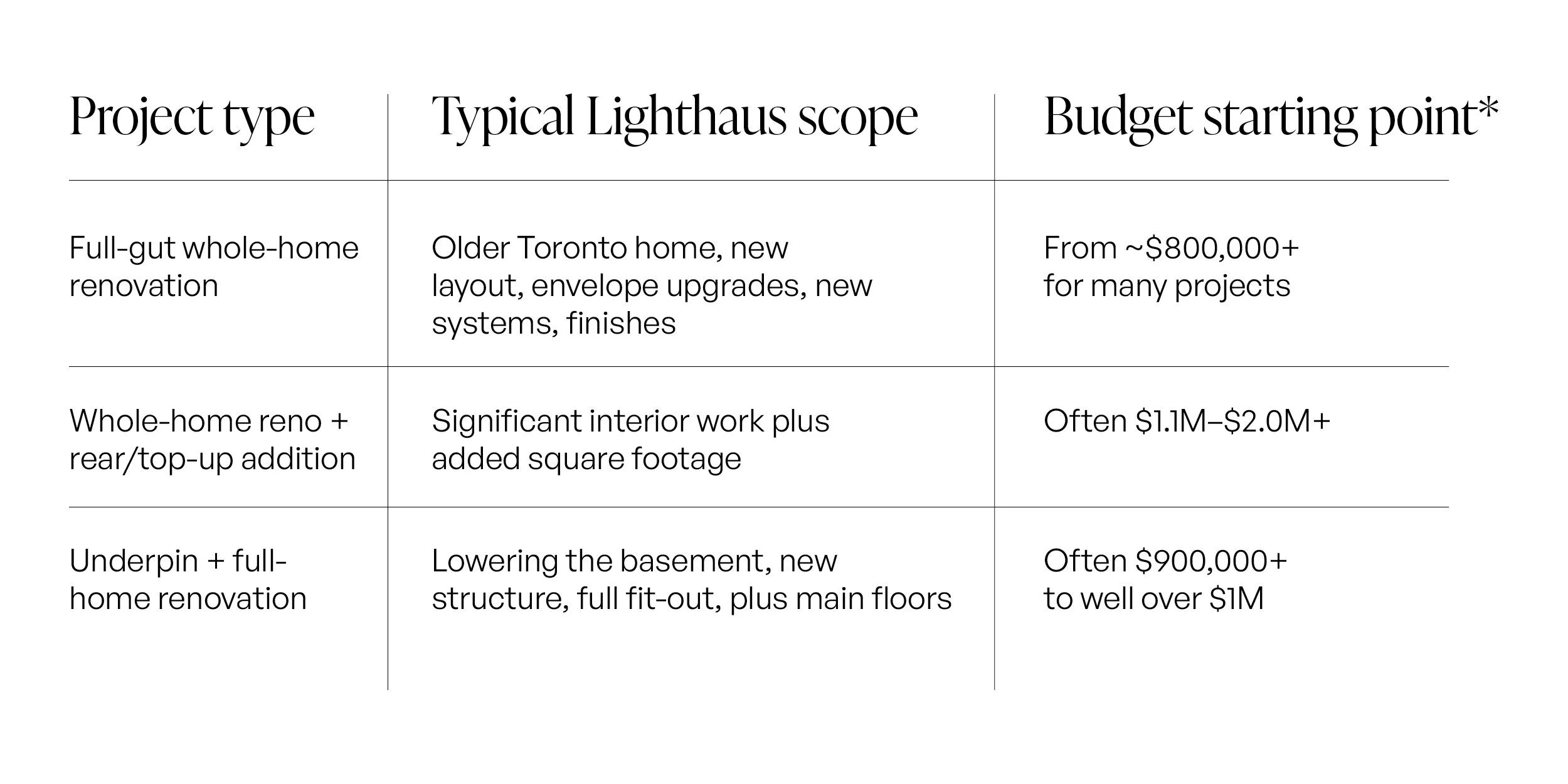
*These are broad ballpark ranges to help with early budgeting; a tailored preconstruction process is required for an accurate estimate.
Why “Cost per Square Foot” Is Only a Starting Point
Cost per square foot is a helpful way to compare overall project categories, but it’s not a precise pricing tool. Two 2,000 sq. ft houses can have vastly different budgets depending on what’s happening behind the walls, under the floors, and in the ground.
Key reasons the same-sized home can cost very different amounts to renovate include:
Scope of structural work – removing load-bearing walls, re-framing floors, adding steel beams, adding storeys, or adding cantilevers all add significant cost.
Foundation work and underpinning – deepening basements, shoring, dealing with high water tables, or adding new foundations for additions.
Access to the site – laneways, tight streets, limited parking, or no side-yard access can increase labour and crane costs.
Mechanical systems – replacing vs. reusing existing HVAC, plumbing, and electrical, or adding higher-performance systems like heat pumps or in-floor radiant heat.
Level of finishes and customization – highly detailed carpentry, custom millwork, premium stone and tile, and bespoke stairs all influence budget.
Cost per square foot is best used as a rough planning tool to sanity-check expectations at the beginning. Once we understand your specific house and wish list, we refine that number through our preconstruction process.

Moore Park, Toronto Home Addition & Renovation — Lighthaus Built
Major Cost Drivers in a Toronto Whole-Home Renovation
Every house is different, but most full renovations in Toronto involve similar categories of work. Understanding these helps you see where your money is going—and where design decisions will have the biggest impact on your budget.
1. Property and Access
Your lot and street conditions affect how efficiently a crew can work and move materials.
Factors that can increase costs include:
No driveway or laneway access to the rear yard, meaning materials and debris must go through the house or be craned over it.
Very limited or permit-only street parking, which adds time and parking costs.
Attached homes (semis, row houses) where additional precautions are needed to protect neighbours and party walls.
2. Foundation, Underpinning, and Additions
Many older Toronto basements were never designed as living space. Lowering a basement (underpinning) to create a comfortable family room, guest suite, or rental unit is extremely common.
Foundation-related work may include:
Underpinning to gain ceiling height and improve the structure.
New foundations for additions (rear additions, front porches, or third-floor/top-up additions).
Shoring and drainage if soil conditions or neighbouring structures require extra support or dewatering.
This is highly specialized work that needs careful engineering and execution, but it can dramatically increase the usability and value of your home.
3. Structure and Superstructure
The way your house was originally built will influence how complex (and costly) it is to open up spaces and change layouts.
Key considerations:
Structural brick vs. wood frame – older structural brick homes often need steel beams and extra detailing when walls are removed, or openings are enlarged.
Clear-span floors vs. mid-span beams – removing central walls to create open main floors usually requires new beams or re-framing.
Roof design – reworking complex pitched roofs, adding dormers, or building flat roofs with parapets all carry different cost implications.
These structural decisions have a major impact on how your home feels day to day, so they’re worth doing properly—just budget accordingly.
4. Mechanical Systems (HVAC, Plumbing, Electrical)
Behind-the-wall systems are some of the least visible yet most important parts of your renovation.
They can include:
Heating and cooling – upgrading from an older gas furnace to a modern high-efficiency system, or to an air-source heat pump, often with new ductwork.
Plumbing – replacing aging supply and drain lines, adding bathrooms, upgrading fixtures, and ensuring proper drainage.
Electrical – replacing knob-and-tube wiring, upgrading service capacity, adding more circuits for today’s loads, and integrating smart controls where desired.
Because these systems are difficult and expensive to change later, a full renovation is the ideal time to get them right for the next several decades.
5. Insulation, Air Sealing, and Windows
Older Toronto homes typically have little or no insulation and significant air leakage. Improving the building envelope has a substantial impact on comfort, energy efficiency, and long-term durability.
Envelope work may involve:
Adding exterior insulation on additions or re-clad walls.
Upgrading wall, roof, and floor cavity insulation (often combining batt, blown-in, and spray foam in strategic locations).
Installing new high-performance windows and exterior doors.
While these investments are “invisible,” they materially improve how your home feels and operates year-round.
6. Interior Finishes and Millwork
This is where your personality shows and where quality becomes visible.
Finishes that influence cost include:
Tile type and size, stone selection, and complexity of installation.
Flooring material and detailing (e.g. herringbone patterns vs. straight lay).
Custom cabinetry and millwork: kitchens, built-ins, mudrooms, closets, and feature walls.
Stair design—including modern metal and glass staircases or sculptural wood stairs.
Material choices matter, but so do the details of how those materials are installed. High-end finishes usually require more time and expertise to execute beautifully.
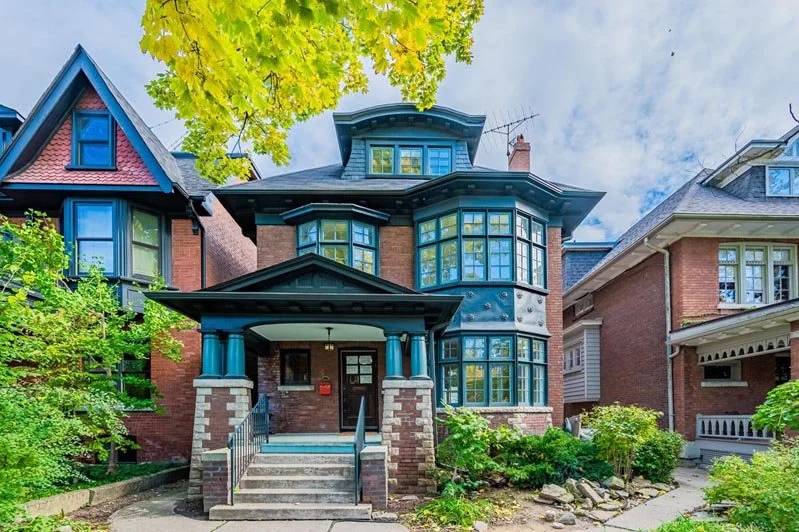
Palmerston, Toronto Whole Home Renovation — Lighthaus Built
Why Preconstruction Is Key to an Accurate Budget
A realistic renovation budget doesn’t come from a quick site visit and a single number. It comes from a structured preconstruction process where we:
Clarify your priorities and must-haves vs. nice-to-haves.
Work closely with your architect and consultants to align design decisions with budget from the beginning.
Investigate site conditions (foundation, structure, access, services) early.
Develop detailed scopes of work and specifications so pricing is based on what you actually want—not generic allowances.
This early investment in planning saves you from costly redesigns, scope creep, and mid-project surprises. It also gives you confidence that the number you’re working with is grounded in your specific home, not just a generic per-square-foot estimate.
If you’re at the very beginning of your renovation journey, a preconstruction consultation is often the best next step. You can read more about this in our blog post “Pre-construction Planning: The Secret Sauce of Building”.
Frequently Asked Questions: Full Home Renovation Costs in Toronto (2026)
How much does a full home renovation cost in Toronto in 2026?
High-quality full-gut renovations of older Toronto homes typically range from $800,000–$1,500,000+ for 2,000–2,500 sq. ft. properties, depending on scope, structural work, additions, and finish level. Basic cosmetic updates are much lower, but comprehensive projects, including new systems and layouts, push into the high six to low seven figures.
What is the cost per square foot for a home renovation in Toronto?
In 2026, full-gut whole-home renovations average $450–$550 per sq. ft. for older Toronto homes, covering structural changes, mechanical upgrades, insulation, and quality finishes. Cosmetic refreshes fall at $100–$200/sq. ft., while high-end custom work exceeds $550/sq. ft.
Is it cheaper to renovate or tear down and rebuild in Toronto?
Renovating is often cheaper if your foundation is sound and you want to preserve neighbourhood character, and you aren’t making big structural changes. But rebuilds can be more cost-effective long-term for severely compromised structures or when zoning allows a better layout.
Do I need permits for a full home renovation in Toronto?
Yes—structural changes, underpinning, electrical/plumbing upgrades, additions, or any work affecting safety/load-bearing elements require City of Toronto permits and inspections. A licensed builder handles applications, drawings, and compliance to avoid delays or fines.
How long does a full home renovation take in Toronto?
Most full-gut renovations take 9–12 months from construction start to completion, depending on scope, approvals, and site access. Underpinning or additions can extend timelines; our preconstruction process minimizes surprises and keeps you on track.
How can I get an accurate renovation cost estimate for my Toronto home?
Start with a preconstruction consultation: we review your house, clarify priorities, and develop detailed scopes for firm pricing—not generic guesses. Download our free Toronto Renovation Cost Guide for a deeper breakdown of 50+ cost factors.
What adds the most value to a Toronto home renovation?
Prioritize envelope upgrades (insulation/windows), open layouts, energy-efficient systems, and kitchens/baths—aiming for timeless quality over trends. These boost comfort, efficiency, and resale while standing up to Toronto winters.
Next Steps: From Ballpark to Blueprint
If you’re thinking about a full home renovation in Toronto in 2026 and wondering, “Is this even in the realm of our budget?”, here are a few practical next steps:
Download our Toronto Renovation Cost Guide
Our free guide walks through the major elements of a renovation—foundations, structure, mechanical systems, finishes—and explains how each affects your budget in more detail.Explore our recent projects
Look at full-home renovations like our historic Sorauren, Moore Park, and Palmerston projects to see how we’ve approached similar homes and scopes.Book a preconstruction consultation
Share your home’s details, your wish list, and your early budget. We’ll help you understand whether a full renovation, a renovation plus addition, or a rebuild is the right path—and what kind of investment to plan for.
Thinking About Renovating Your Toronto Home in 2026?
With renovation timelines, material costs, and design decisions becoming more complex, thoughtful planning matters more than ever. At Lighthaus Built, we specialize in design-forward, value-conscious home renovations across Toronto and Ontario—helping homeowners make confident decisions that balance beauty, performance, and long-term value.
Whether you’re planning a phased renovation, a kitchen or bathroom update, or a full home transformation in Toronto, our team brings clarity, transparency, and craftsmanship to every project.

Lighthaus Built’s
FREE Toronto Renovation Cost Guide
Are you considering a home addition or full home renovation and not sure how to budget for it?
Our free guide walks you through over 50 topics and how the cost of materials, labour and design ranges so you can plan for your Design-Build home renovation in Toronto.
Meet the Author

Dave Cook is co-owner of Lighthaus Built and has spent 17 years working in single-family construction in Toronto. Through the years, he has worked as a carpenter, site supervisor, and project manager for more than 60+ major, high-end renovations and custom homes.
As an HCRA-licensed builder, he and his company (Lighthaus Built) are well-versed in constructing high-quality homes and take pride in what they do.
On a personal level, Dave is very active in several sports - most notably, distance running, road cycling, and tennis. He bakes bread (for personal consumption) and no, this was not a Covid thing. He grew up eating homemade bread and has made my own for the past 20 years. He has been married for 20 years and has two teenage children and a dog.