
Home Addition Cost in Toronto: A Builder's Honest Breakdown (2026)
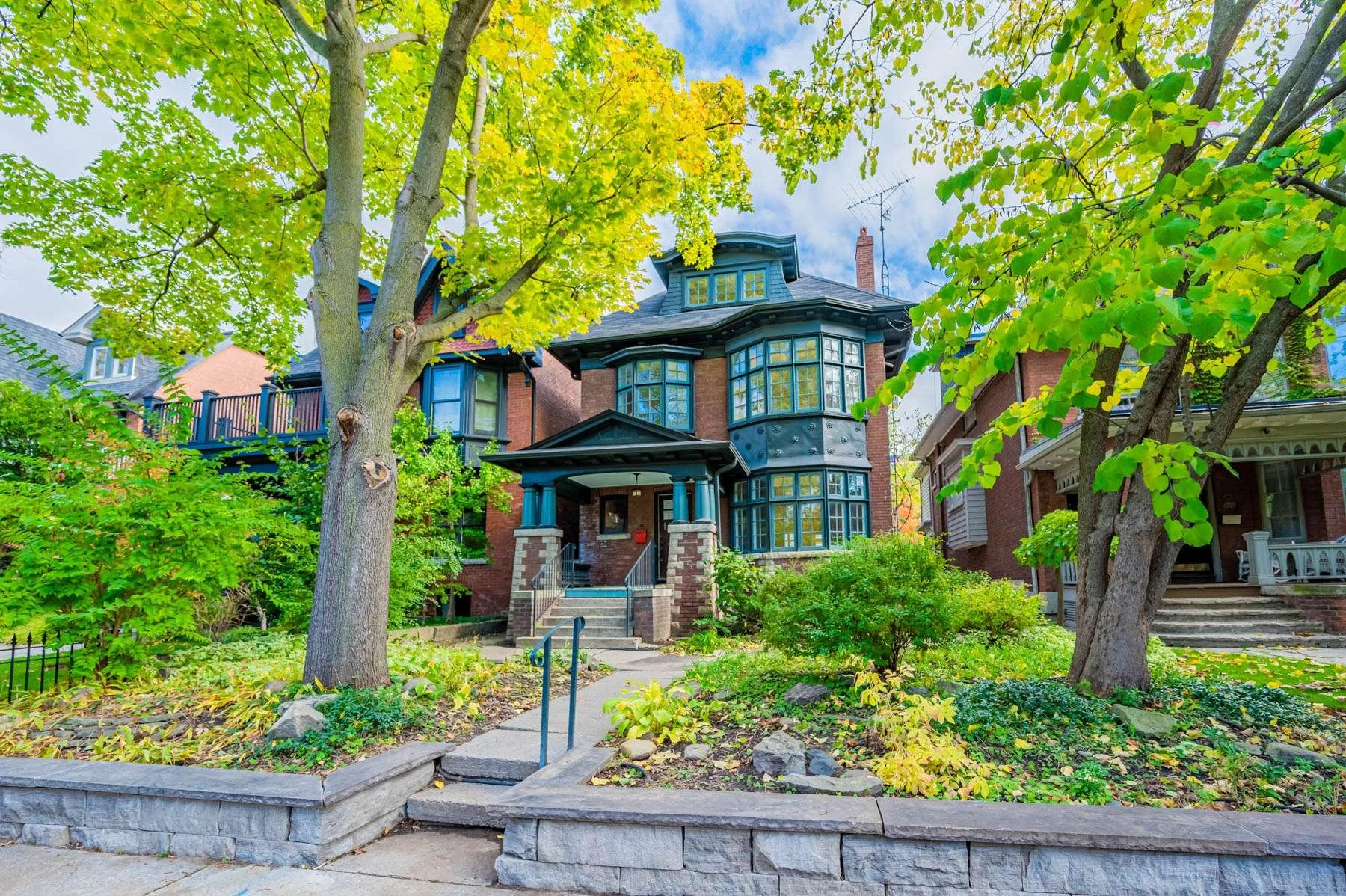
Questions around home addition cost in Toronto are among the most common we hear from homeowners who've outgrown their space but aren't ready to leave their neighbourhood. And honestly? That's a completely rational position in 2026.
The average detached home in Toronto now sits above $1.3 million. If you want to upsize to something larger in the same area — Leslieville, Roncesvalles, The Beaches — you're looking at transaction costs alone of $80,000 to $150,000 before you move a single piece of furniture. Land transfer tax on both ends. Real estate commissions. Lawyer fees. A moving truck. It adds up fast.
So adding on starts to make a lot of financial sense. But the internet isn't much help when you're actually trying to plan a budget. Most guides throw out ranges so wide — "$100,000 to $500,000" — that they're functionally useless. You can't make a real decision with that.
This post does something different. We're breaking down real 2026 costs by addition type — rear, second storey, and third storey — separating the hard construction costs from the soft costs most guides ignore entirely, and giving you an honest framework for understanding what actually drives the final number on your project. If you're comparing an addition against the cost of moving, there's a section for that too.
One note before we start: these numbers come from Lighthaus's actual project experience in Toronto. They reflect quality builds — not the cheapest contractor on the market, not ultra-luxury McMansion work, but quality-focused custom homes built to last. If you're getting quotes significantly below what you see here, ask why.
Which Type of Addition Is Right for You?
Before we get into numbers, a quick orientation. The three main addition types serve different situations — and picking the wrong one for your lot and your goals means either underbuilding or spending on complexity you didn't need.
Rear Addition
You build out into your backyard. This is the most common starting point for families on standard Toronto lots in neighbourhoods like Riverdale, Leslieville, and Roncesvalles. A rear addition expands your main floor — kitchen, dining, family room — and can include a basement below it. The tradeoff is yard space. If you have 25 feet of backyard depth and want to add 18 feet, you'll notice it.
Second-Storey Addition
You build up, typically on a bungalow or over a one-storey rear extension. The advantage: you gain significant square footage without touching your footprint or losing yard. The complexity is real — your existing structure usually needs reinforcement, the roof comes off, and the home is genuinely disrupted during construction. Best suited to bungalows and homeowners who need bedrooms more than main-floor square footage.
Third-Storey Addition
A floor added on top of an existing two-storey home. Often called a "top-up." This is the right move when your lot doesn't allow meaningful backyard expansion, and your home is already two storeys. It requires structural engineering and is more complex and expensive per square foot than the other two types. Best suited to narrower lots in denser neighbourhoods where vertical is the only direction left.
If you're weighing a rear addition against a third storey and want to go deeper on that decision, we've written a full breakdown:
Cost Overview — What Toronto Homeowners Are Actually Paying in 2026
Home addition cost in Toronto in 2026 varies significantly by type, scope, and the specific conditions of your home and lot. Here's a clean summary to orient you before we go deeper on each type.
These figures are hard construction costs — materials and labour — before HST and before soft costs like permits, architectural drawings, and engineering. All three caveats matter. We'll get to them.
| Addition Type | Typical Size | Total Cost Range | Approx. Cost / sq ft |
|---|---|---|---|
| Rear | 400–600 sq ft | $250,000–$450,000+ | $450–$550 / sq ft |
| 2nd Storey | 600–1,000 sq ft | $400,000–$700,000+ | $450–$650 / sq ft |
| 3rd Storey | 400–700 sq ft | $450,000–$750,000+ | $550–$800 / sq ft |
Important notes on these numbers:
All figures are for quality builds — not budget contractors, not luxury custom.
Costs are before HST (13%) and exclusive of soft costs (permits, drawings, engineering).
Every project varies based on your home's existing condition, lot access, and finish level.
Pre-construction planning is the only way to get a real number for your specific home (See: Preconstruction Planning: The Secret Sauce of Building)

Rear Addition Cost in Toronto
For most Toronto families, the rear addition is the starting point. You're expanding your main floor — usually to get a proper kitchen, a dining area that can fit everyone, and a family room that doesn't double as a hallway. For homes in Roncesvalles, Riverdale, Leslieville, and The Beaches, a 400–600 sq ft rear addition is the most common scope.
Expect to pay roughly $450–$550 per square foot in construction cost. On a 500 sq ft addition, that's $225,000–$275,000 in hard costs. The wide range isn't fudging — it reflects real variation.
What Drives Cost on a Rear Addition
Whether there's a basement below it. A full-depth basement under your addition adds significant excavation and foundation cost — typically $40,000–$80,000+ depending on conditions — but it's often worth it for the added usable space.
Kitchen or bathroom inclusion. Mechanical work (new plumbing runs, HVAC extensions, electrical panels) is the single biggest cost driver per square foot. A rear addition that includes a new kitchen will sit at the high end of the range or above it.
Roofline integration. A flat or simple shed roof integrates more cheaply than a complex hip or gabled roofline that needs to match your existing home's profile.
Foundation requirements. Older Toronto homes sometimes have footings that need reinforcement before you can build on top of or adjacent to them. This isn't the norm, but it's a real possibility in homes built pre-1960.
Rear additions are generally the most budget-accessible entry point for families who need more main-floor living space — and the type with the most flexibility in terms of scope and phasing.
Second-Storey Addition Cost in Toronto
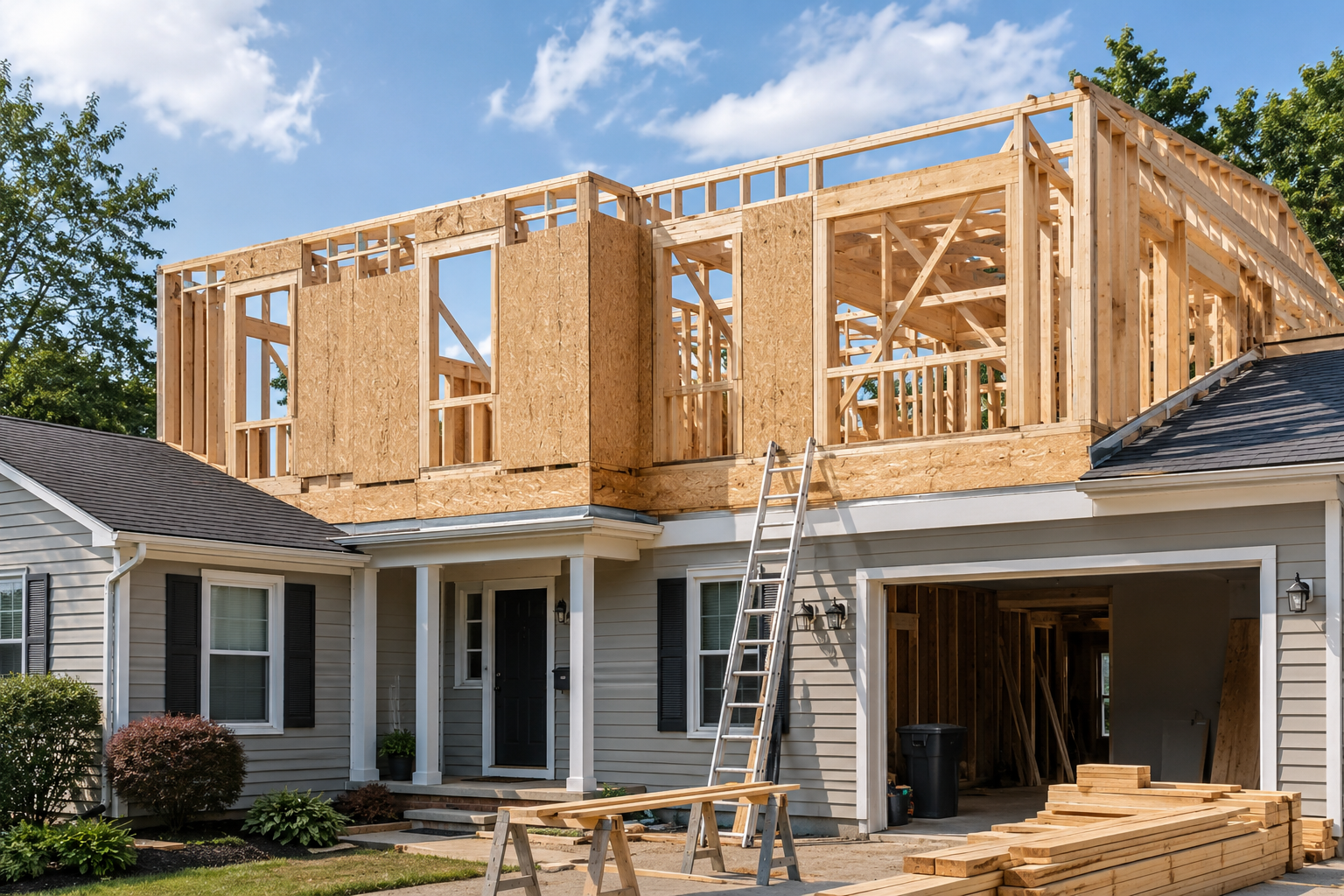
A second-storey addition is typically built on top of a bungalow or added over an existing single-storey rear extension. It's significantly more involved than a rear addition — and that complexity shows up in the budget.
Expect $450–$650 per square foot in hard construction costs. On a 700–800 sq ft second storey, that's $315,000–$520,000 before soft costs and HST.
What Drives Cost on a Second Storey
Structural reinforcement of the first floor. Before you can build on top of an existing structure, engineers need to confirm — and often upgrade — the existing foundations, walls, and beams to carry the added load.
Roof removal and replacement. The existing roof comes off entirely. A new roof gets built after the addition is framed. This is a significant labour cost and a weather-exposure risk that needs to be managed carefully through the construction schedule.
Full extension of all mechanical systems. HVAC, plumbing, and electrical all need to run to the new floor. On a bungalow, none of these systems were designed for a second storey — they all get extended or replaced.
Staircase integration. Adding a proper staircase to the existing first floor often means rethinking the floor plan below. This isn't just a construction cost — it's a design challenge.
The disruption factor — plan for it:
Second-storey additions are one of the most disruptive renovation types for a family living in the home. Once the roof comes off, you're exposed to the weather. The noise, dust, and access disruption during construction are significant.
Many families choose to temporarily relocate during a second-storey build — typically 5–7 months. That's a real cost ($4,000–$10,000/month in Toronto rental costs) that should be in your budget from day one.
That said, second-storey additions add the most livable square footage relative to footprint. On a lot with limited backyard depth, it's often the only way to get the bedroom count a growing family needs without touching the yard at all.

Third-Storey Addition Cost in Toronto
A third-storey addition — sometimes called a top-up — is added on top of an existing two-storey home. It's the most technically complex of the three addition types, and it's priced accordingly.
Expect $550–$800 per square foot in hard construction costs. On a 500 sq ft third storey, that's $275,000–$400,000 in construction alone — before soft costs, before HST.
Why Third Storey Costs Are Higher
Structural engineering requirements. Third-storey additions can require steel reinforcement of the existing structure — the load path has to be engineered from the new floor all the way down to the foundation. This adds both engineering fees and construction costs.
Material logistics. Getting materials, scaffolding, and equipment to height takes more time and adds crane costs that rear additions don't require.
Roofline complexity. Tying a new floor into an existing roofline that wasn't designed for it takes careful detailing, both structurally and aesthetically.
Third-storey additions are especially relevant in denser Toronto neighbourhoods where the lot is too narrow or shallow for a meaningful rear addition — parts of The Annex, Leslieville on narrower lots, Bloor West Village, and areas of Cabbagetown. When you can't go out, you go up.
One critical check before you get too far into planning: heritage zoning and neighbourhood-specific height restrictions. Several Toronto neighbourhoods have streetscape guidelines or heritage designations that can limit the height or exterior appearance of additions. Roncesvalles, Cabbagetown, and parts of The Annex are examples. This should be confirmed with a heritage planner or architect before design begins — not after. See: Rear Additions vs. Third-Storey Additions in Toronto
Soft Costs — The Budget Line Most Guides Ignore
Here's where most homeowners get surprised. The construction cost — what the contractor actually builds — is only part of your total project budget. Soft costs are the non-construction expenses that run on top of hard costs, and in our experience, they consistently add 15–25% to a project's total.
We're going to be specific here, because vague warnings don't help you build a real budget.
Architectural Drawings and Design Fees
A quality architect typically charges 12–15% of the construction cost. On a $350,000 rear addition, that's $42,000–$52,000. This isn't optional — you need stamped drawings for your building permit, and the design quality directly affects the construction quality. Lighthaus works collaboratively with architects rather than replacing them; the drawings your architect produces are what we build from.
Structural Engineering
Typically $3,000–$8,000+, depending on the addition type and complexity. Second-storey and third-storey additions sit at the higher end — often above $8,000 — because the structural demands are greater and the engineering analysis is more involved.
Toronto Building Permit Fees
The City of Toronto's permit fee schedule is based on the type of work and project value. For residential additions, you're typically looking at a base fee plus a per-square-metre charge. The City's current fee schedule is publicly available through the City of Toronto's website. Budget roughly $2,000–$5,000 for a typical addition, depending on scope — but verify current rates directly with the City, as fees are updated periodically.
Committee of Adjustment (If Required)
When a project exceeds zoning setbacks, lot coverage limits, or height restrictions, a minor variance application through the Committee of Adjustment is required. This is more common than people expect in Toronto — many additions push against at least one zoning limit. A variance application adds 2–4 months to your timeline and meaningful cost: the application fee is a few thousand dollars, and if you need planning or legal representation (which is advisable for contested applications), add $5,000–$15,000+ on top of that.
HST
13% on all construction in Ontario. It's not optional, it's not negotiable, and it's remarkable how often it gets forgotten in early budget conversations. On a $350,000 addition, that's $45,500. Make sure you know whether any quote you receive includes HST or not.
Contingency
We recommend 10–15% on top of everything. Older Toronto homes regularly surface surprises during demolition — knob-and-tube wiring that needs full replacement, hidden rot behind walls, undersized footings that need reinforcement. These aren't rare edge cases; they're the norm in homes built before 1970. A contingency isn't pessimism; it's accurate planning
How preconstruction changes this picture:
The best way to surface soft costs before they become surprises is a proper preconstruction process — one that includes detailed drawings, structural review, permit consultation, and a thorough look at your home's existing condition before construction begins.
See: Phase 1 Pre-construction Planning: The Secret Sauce of Building
What Actually Moves the Number Up or Down
Two homeowners in the same neighbourhood, both doing rear additions of similar size, can get to very different final numbers. Here's why.
Finish Level
Standard versus premium versus custom finishes is the single most controllable variable in your budget — and the one where you have the most influence. Custom cabinetry, heated floors, high-end tile, smart home systems: these don't cost the same as builder-grade equivalents. Deciding your finish level early and holding to it is one of the most effective budget management tools available to homeowners.
Kitchen or Bathroom Inclusion
Mechanical work is the biggest cost driver per square foot in any addition. New plumbing runs, HVAC extensions, electrical panel upgrades — these are expensive, and they're required whenever you're adding a kitchen or bathroom. If your addition includes both, you're consistently looking at the high end of any per-square-foot range.
Lot Access Constraints
Tight laneways, no side yard access, neighbouring semis that require shared-wall precautions — these affect labour efficiency and material logistics in ways that aren't always obvious upfront. A tight site means more manual labour, potentially a crane, and more time. All of that has a cost.
Heritage District Requirements
Roncesvalles, Cabbagetown, The Annex, and other heritage-designated areas may have restrictions on exterior materials, rooflines, window placement, and overall massing. These aren't just aesthetic preferences — they can require design revisions, additional consultations, and materials that cost more than standard alternatives.
The Condition of Your Existing Structure
This is the variable nobody wants to talk about because it's the one you can't fully control. Hidden rot, knob-and-tube wiring, undersized foundations: these are regularly uncovered during demolition in older Toronto homes, and they can't be priced until walls are opened. A well-run preconstruction process surfaces as many of these as possible before construction begins — but some surprises are only visible once demo starts.
This is why a detailed preconstruction process isn't optional — it's the only way to move from ballpark estimates to real numbers for your specific project. Not because we want you to spend more money upfront, but because the alternative is discovering expensive surprises mid-construction, when your options are limited, and your leverage is gone.
Addition vs. Moving — Is It Worth It in Toronto's 2026 Market?
For most Toronto homeowners, the math favours adding on. Here's why.
A larger home in the same neighbourhood costs $1.3 million or more. Transaction costs — land transfer tax on both the sale and purchase, real estate commissions, legal fees, moving costs — run $80,000–$150,000 before you've changed a single thing about your living space. You've spent that money, and you're still in someone else's layout, someone else's renovation decisions, someone else's neighbourhood that happens to be adjacent to yours.
A well-executed addition typically returns 50–75% of its cost in added property value. More importantly, it keeps you in the neighbourhood you've chosen, in a home you've customized for how your family actually lives.
That said, there are situations where moving makes more sense. If your heart is set on a dramatically different neighbourhood, if your current home has structural problems that make a major addition impractical, or if your lot genuinely can't accommodate what you need — those are real reasons to sell. We'd rather tell you that honestly than push you toward a project that isn't the right fit.
But if the math points toward an addition, the next question is: what will it actually cost for your specific home? That's exactly what the preconstruction process is designed to answer.
For homeowners whose scope extends beyond a single addition — full main floor renovations, whole-home transformations — see: How Much Does a Full Home Renovation Cost in Toronto? (2026)
Frequently Asked Questions
How much does a rear addition cost in Toronto?
A typical rear addition in Toronto — 400–600 sq ft, quality construction — runs between $250,000 and $450,000 in hard construction costs before HST and soft costs. The range depends heavily on whether you're including a basement, adding a kitchen or bathroom, and the complexity of roofline integration. Expect total all-in costs (with soft costs and HST) to run 30–40% above the hard cost figure.
Is a home addition cheaper than moving in Toronto?
In most cases, yes — especially when you factor in transaction costs. Buying and selling in Toronto typically costs $80,000–$150,000 in land transfer tax, commissions, and moving costs, before you've improved anything. A well-executed addition is a targeted investment in a home and neighbourhood you've already chosen, and typically returns 50–75% of its cost in added property value.
What permits do you need for a home addition in Toronto?
All home additions in Toronto require a building permit from the City of Toronto. Depending on your project's size and location, you may also need a zoning review or a minor variance from the Committee of Adjustment if your addition exceeds setback or lot coverage limits. Heritage properties or those in heritage conservation districts may require additional approvals. Your architect or contractor can guide you through the specific requirements for your address.
How long does a home addition take from start to finish?
Timeline varies by addition type and complexity, but a realistic estimate from first design consultation to occupancy is 12–18 months — sometimes longer. That includes the design and permit phase (typically 4–6 months), construction (3–6 months for a rear addition, 5–8 months for a second or third storey), and any Committee of Adjustment process if required (add 2–4 months). Projects that skip thorough preconstruction often end up taking longer, not shorter.
What is the difference between a second storey and third storey addition?
A second storey addition adds a new floor on top of a single-storey home (usually a bungalow or a one-storey rear extension). A third storey addition adds a new floor on top of an existing two-storey home. Third storey additions are structurally more complex — they typically require steel reinforcement and more intensive engineering — and cost more per square foot as a result.
What are the hidden costs of a home addition?
The biggest surprise for most homeowners is soft costs: architectural drawings (8–15% of construction), structural engineering ($3,000–$8,000+), permit fees ($5,000–$15,000 typically), Committee of Adjustment fees if required, HST (13%), and a recommended contingency of 10–15% for surprises uncovered during demolition. In older Toronto homes, knob-and-tube wiring, hidden rot, and undersized foundations are common discoveries.
Does a home addition increase property value in Toronto?
Yes, but the real question often is ‘will I make my money back on resale?’ That really depends. Property values fluctuate based on what people are willing to pay for it, which can fluctuate based on supply and demand. Construction costs, however, are tied to actual work done and labour rates, which never go down. Regardless of the value of your property, a 1000 ft2 addition of a given quality will cost the same. If financial return is your primary goal, then you should be very careful to start with a fixed budget and only design to what the market is demanding. If, however, your goal is to live in your home for many years and to enjoy your life in it, then you should focus on adding features that you want. If you won’t be selling for 10+ years, then resale shouldn’t factor into your decision.
How do I know if my lot allows a home addition?
Toronto zoning bylaws govern how much of your lot can be covered by a structure (lot coverage), how close you can build to property lines (setbacks), and how tall you can build (height limits). Your address's zoning classification determines the specific rules that apply. A preliminary zoning review with your architect or a permit consultant will tell you what's possible before you invest in full design work — and whether a variance application is likely to be required.
Ready to Move from Ranges to Real Numbers?
You've done the research. You understand the types, the cost drivers, and the soft costs most guides don't mention. The next step isn't a quote — it's a conversation about your specific home, your lot, and what you actually want to build.
Lighthaus's preconstruction process is exactly how we help Toronto homeowners move from ballpark numbers to real ones. It's a structured, collaborative look at your project before construction begins — the drawings, the engineering review, the permit consultation, the detailed scope — so there are no surprises when it matters.
If you're thinking seriously about a home addition, that's where we start.

Lighthaus Built’s
FREE Toronto Renovation Cost Guide
Are you considering a home addition or full home renovation and not sure how to budget for it?
Our free guide walks you through over 50 topics and how the cost of materials, labour and design ranges so you can plan for your Design-Build home renovation in Toronto.
Meet the Author

Dave Cook is co-owner of Lighthaus Built and has spent 17 years working in single-family construction in Toronto. Through the years, he has worked as a carpenter, site supervisor, and project manager for more than 60+ major, high-end renovations and custom homes.
As an HCRA-licensed builder, he and his company (Lighthaus Built) are well-versed in constructing high-quality homes and take pride in what they do.
On a personal level, Dave is very active in several sports - most notably, distance running, road cycling, and tennis. He bakes bread (for personal consumption) and no, this was not a Covid thing. He grew up eating homemade bread and has made my own for the past 20 years. He has been married for 20 years and has two teenage children and a dog.