
The 2027 home renovation trends in Toronto look different from the decor forecasts you will see elsewhere, because ours start on the job site, not on a mood board. Colour of the year announcements are fun to follow. In reality, what shapes a renovation is what clients ask for, what the house allows, and what the budget supports.
This is what managing multiple home renovation projects in 2026 taught us, what we expect to see more of in 2027, and what to plan now so your project starts when you want it to.
What 2026 Taught Us About Renovating in Toronto
Last December we wrote that 2026 would be a year of renovating with intention: warmer colour, natural materials, flexible rooms and homes designed for real life. You can read the full forecast in our 2026 home renovation trends in Toronto and Ontario.
Overall, homeowners continued to see the value in setting trends aside and working out what truly matters to them. Most of our clients are not renovating to impress anyone. They want to improve their own lives at home.
The trends that held up were the ones tied to how people live, not how a room photographs. Warm materials, rooms that do more than one job, and upgrades that make a house more comfortable all stayed in demand, while purely decorative ideas came and went.
The questions we heard most often in 2026 were practical ones. Owners often ask whether they should do everything on their list at once or phase the work. We recommend doing as much as you can at once, because phased projects usually cost more.
They also asked whether to keep the existing walls or strip off the old finishes and start fresh. When possible, removing old plaster walls significantly improves the finish quality and look of a space.
The 2027 Home Renovation Trends in Toronto We're Planning For
Here are the four shifts we expect to shape renovation and addition projects in Toronto in 2027, and what each one means once it reaches a construction schedule.
1. Defined rooms and flexible space
Open concept is not going away, but more homeowners are asking for ways to close parts of it off. That might be a home office with a real door, a quiet reading room, a mudroom that hides the clutter, or a main-floor room that is a guest room one year and a nursery the next. In an older house with a rear addition, it often means keeping the kitchen and family room open while adding a defined room off the hall.
From the builder's side, a room meant to be quiet has to be planned that way from the start: sound insulation in the walls, solid doors, and mechanical runs that don't carry noise. Adding those after drywall is far more disruptive.
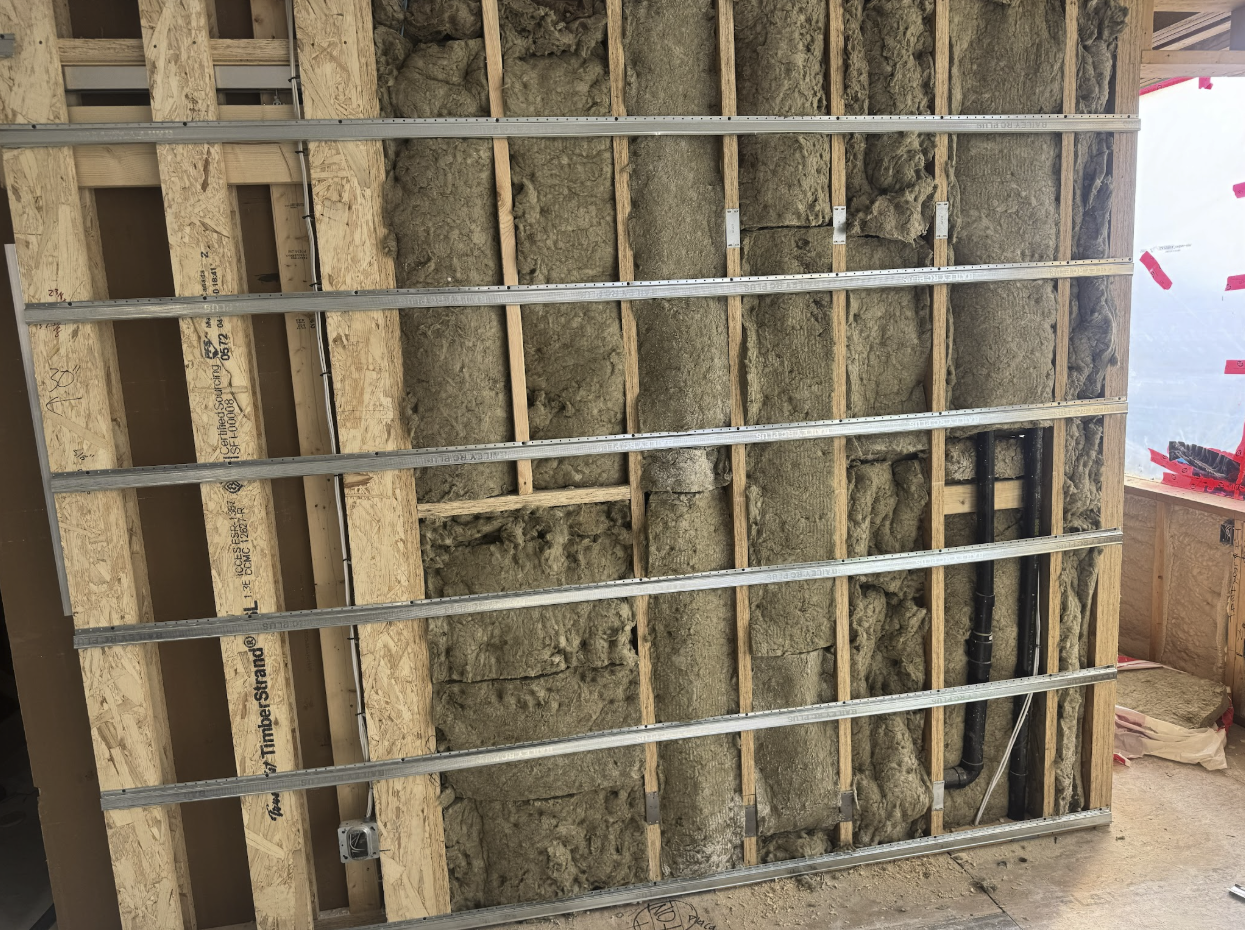
Sound insulation being added to our Crawford renovation — Lighthaus Built
2. Warmer materials and colour that last
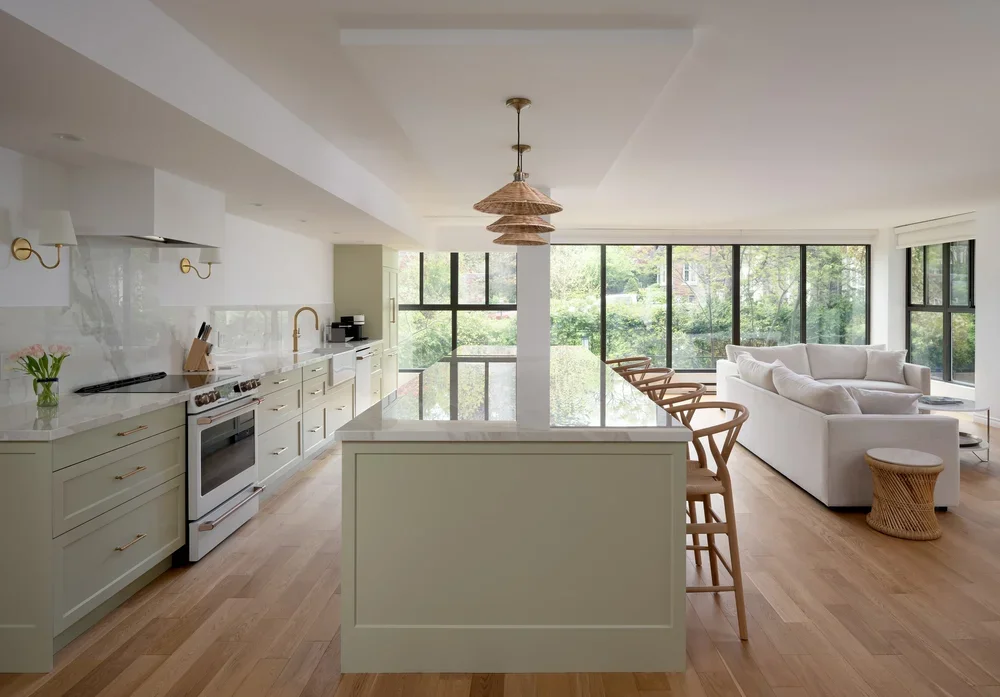
The 2027 colour of the year announcements lean toward green and earth tones, such as Behr's Grounded, a deep mossy green, and Dulux's Soulful Sage, a softer green. Kitchen forecasts point the same way, with olive, warm taupe and tobacco browns replacing grey, alongside natural wood and stone.
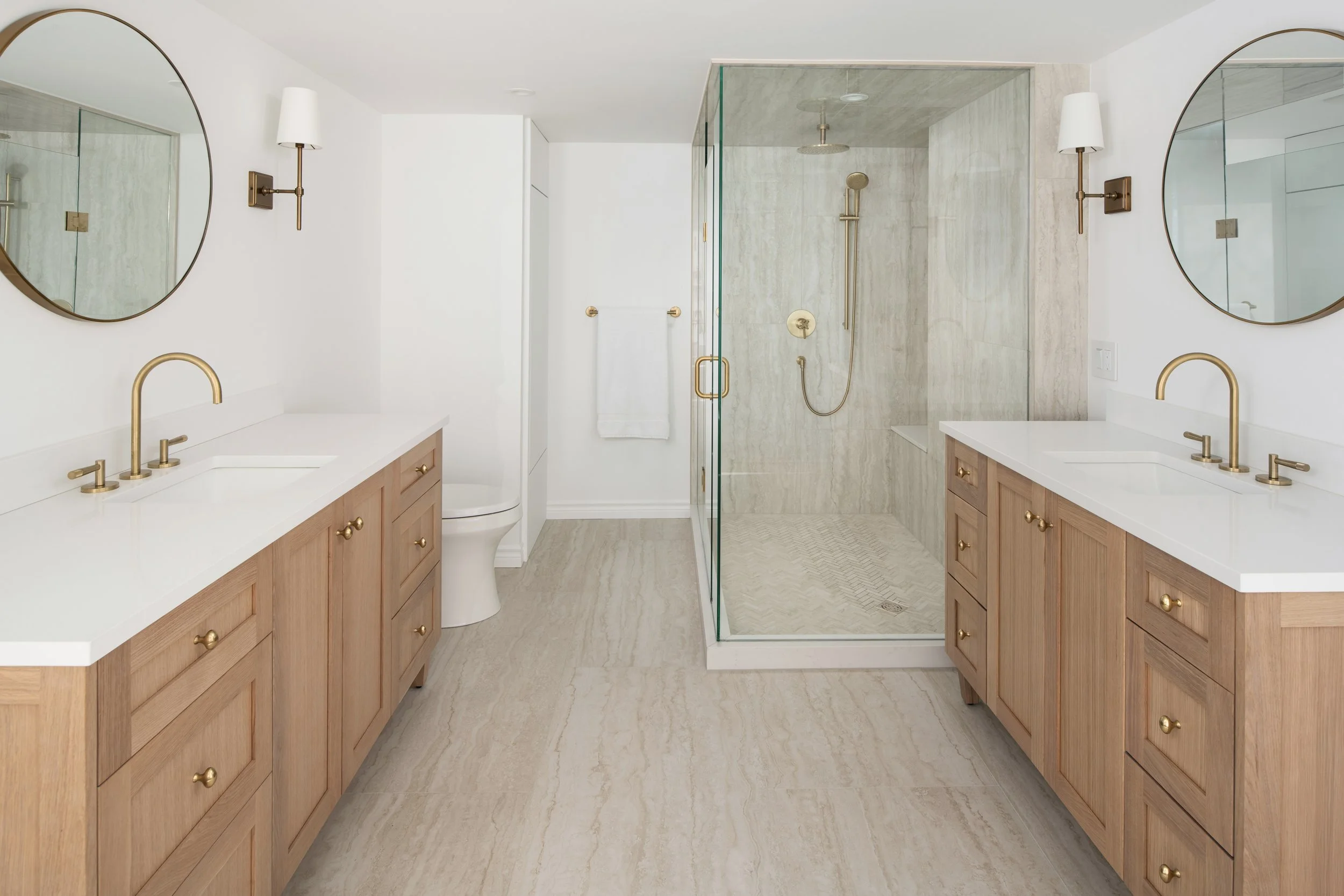
For a renovation, the useful question is what will still look right in ten years. Paint is the cheapest thing to change. Cabinetry, tile and countertops are not. Our advice is to put the boldest colour where it is easy to change later, such as walls, a powder room or a front door, and to invest in materials that age well: solid wood, natural stone and good hardware. White oak hardwood floors have been in demand for several years, and that continues.
We have also seen a minor shift toward natural stone countertops, despite their premium over man-made materials.
3. Efficiency and systems while the walls are open
Older Toronto homes often have little insulation, drafty windows, and aging mechanical systems. A renovation is the best time to fix that, because the walls, floors, and ceilings are already open. Insulating and air sealing during a gut or addition is far simpler than retrofitting later, and it is also when new heating, cooling and ventilation can be planned properly. We cover what we find in these houses in our guide to old home renovation in Toronto.
Two details are easy to overlook. First, electrical capacity: heat pumps, induction cooking and EV chargers all draw on your panel, so ask early whether the house needs a service upgrade. Second, ventilation. A tighter, better-insulated house needs a plan for fresh air, so fresh-air ventilation and the routing of ducts belong in the design drawings, not as an afterthought. Both are far simpler to solve while the walls and ceilings are open.
The City of Toronto's Home Energy Loan Program, which the City lists as open for applications, offers financing for upgrades such as insulation, windows and heat pumps. Approval comes before work begins, and homeowners choose their own contractor. Check the City's page for current terms and whether your property qualifies, and ask your builder how approval fits your construction schedule.
4. New ways to live on the lot
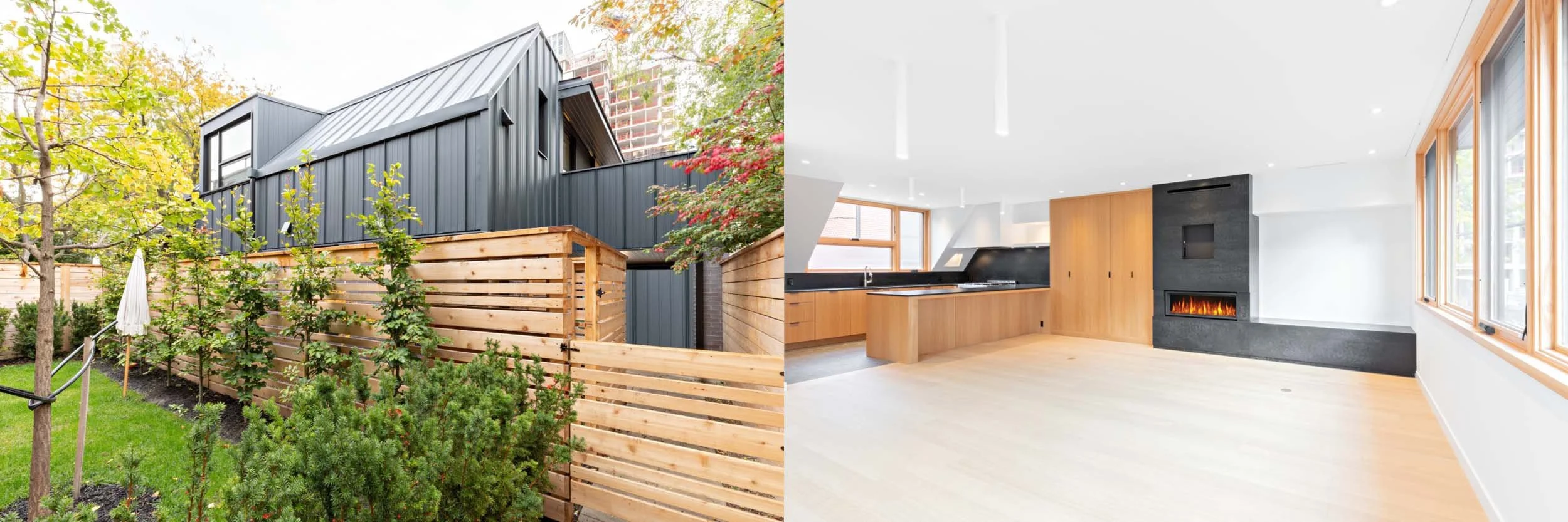
More space does not always mean enlarging the main house. Some homeowners are adding home gyms and dedicated office space, and others are building laneway or garden suites for family, work or rental use. Most trend roundups ignore these, even though they change what a Toronto property can do. Clients definitely want home gyms and home offices, because working from home, even part time, continues.
Laneway and garden suites are less of an ask because of the high cost. They usually only factor into a project if the suite will be rented out or if extended family needs to stay right away.
A laneway or garden suite is its own construction project, with its own approvals, services and costs. Our guide to the cost to build a laneway house in Toronto is the place to start.
How to Tell a Lasting Trend From a Passing One
Not every trend deserves a place in a renovation budget. A useful test is whether an idea solves a real problem in how you live, or only changes how a room looks in a photo. Lasting shifts tend to answer one of four needs: more usable space, more comfort, better efficiency or longer-lasting materials. Passing ones are usually surface finishes.
Spend on what is hard to change later: structure, insulation, windows, wiring, plumbing and the layout itself.
Experiment where it is easy to change: paint, lighting, hardware, furniture and accessories.
Ask your builder what a trend adds to the build: a feature that looks simple can change framing, services or approvals.
What This Means for Your 2027 Renovation Plan
Trends are the easy part. The harder part is the calendar. The design phase takes longer than most people expect, and the decisions made in it largely set what the project will cost. If you want to build in 2027, the order that works best is:
Decide what the house needs. Start with how you live, not with a Pinterest board.
Talk to a builder before the drawings are final. Builders can flag cost and structural risks while the design can still change.
Settle long-lead items early. Windows, custom cabinetry and specialty stone can take time to arrive, so ask your builder what to order first.
Allow time for approvals. An addition or a laneway or garden suite needs permits, and sometimes a variance, before construction can begin.
For pricing context, see our guide to what a full home renovation costs in Toronto, and for realistic schedules, read how long a renovation takes in Toronto. We do not quote prices or dates in a trends post, because the right numbers depend on your house.
2027 Home Renovation Trends in Toronto: Frequently Asked Questions
-
The shifts we expect to see most in Toronto are defined rooms alongside open space, warmer materials and green or earth-toned colour, upgrades to insulation and mechanical systems during renovations, and added living space, such as home gyms and offices and, less often, laneway and garden suites. Each one affects how a project is planned and built, not just how it looks.
-
Designers are moving away from all-grey and all-white interiors in favour of warmer, more varied colour. Rooms that look flawless but feel cold are giving way to homes with more texture and personality. We are also seeing the whole main floor “bowling alley” layout, popular for the last 10 years, slowly revert to more defined spaces.
-
Yes, but many homeowners now want to define parts of it. A common pattern is keeping the kitchen and family room open and adding a closed office, quiet room or mudroom nearby.
-
Greens, from mossy to pale sage, along with terracotta, warm taupe and tobacco brown. Natural wood and stone remain popular. Because cabinetry and tile are costly to change, use bold colour where it is easy to update and choose lasting materials for the big surfaces.
-
The best time to start is when you have time to plan properly. Design and approvals take months, so beginning in the winter positions many projects to build in the spring and summer. Our renovation timelines guide shows where the time goes.
Planning a 2027 Project? Start Before the Drawings Are Final
The strongest renovations are planned with the builder at the table early, when changes cost the least. If you are thinking about a whole-home renovation or an addition in 2027, we would be glad to talk through your house, your goals and the timing.
Book a Consult and let's plan your 2027 project.

Lighthaus Built’s
FREE Toronto Renovation Cost Guide
Are you considering a home addition or full home renovation and not sure how to budget for it?
Our free guide walks you through over 50 topics and how the cost of materials, labour and design ranges so you can plan for your Design-Build home renovation in Toronto.
Meet the Author

Dave Cook is co-owner of Lighthaus Built and has spent 17 years working in single-family construction in Toronto. Through the years, he has worked as a carpenter, site supervisor, and project manager for more than 60+ major, high-end renovations and custom homes.
As an HCRA-licensed builder, he and his company (Lighthaus Built) are well-versed in constructing high-quality homes and take pride in what they do.
On a personal level, Dave is very active in several sports - most notably, distance running, road cycling, and tennis. He bakes bread (for personal consumption), and no, this was not a COVID thing. He grew up eating homemade bread and has made his own for the past 20 years. He has been married for 20 years and has two teenage children and a dog.